01The two anchors
Lost net income. What you would have earned.
The net income your business would have earned during the closure period, based on your documented financials rather than on an estimate assembled after the event.

Business interruption insurance, also called business income insurance, replaces the net income your business loses when a covered event stops you trading. It is rarely bought on its own and it is not triggered by the loss you notice. It is triggered by physical damage, and it is bounded by two clocks written into the policy before anything happens.
Talk to an expertGet a quote
Core coverage
The policy replaces what your business would have earned if the covered event had not happened, and it covers the fixed costs that carry on regardless. Two things anchor it and five more sit around them.
The net income your business would have earned during the closure period, based on your documented financials rather than on an estimate assembled after the event.
Rent, mortgage, loan repayments, utilities and the other obligations that carry on regardless of whether you are open. These are the costs that turn a closure into a solvency question.
Retaining key employees through the closure rather than losing them during the rebuild and having to hire and train again at the end of it.
Tax obligations falling due during the interruption period, which arrive on the usual schedule whatever has happened to the premises.
The expense of moving to a temporary location so the operation can keep going while repairs run.
The cost of keeping the operation running at reduced capacity during repairs, which is frequently cheaper for the carrier than paying the full income loss and better for you than closing.
Lost income when a government order prohibits access to your premises because of covered damage nearby. The damage has to be nearby AND covered, which is the part most often missed.
Little of it is bought on its own. Business interruption is endorsed onto the property policy underneath it, which is also what decides which perils it answers to. For smaller operations both usually arrive together inside the bundled alternative for smaller operations.
Your clock
Restoration period is the number that decides this policy, and it behaves differently in every business. Pick the closest match and we will tell you how long an underwriter thinks you would actually be out.
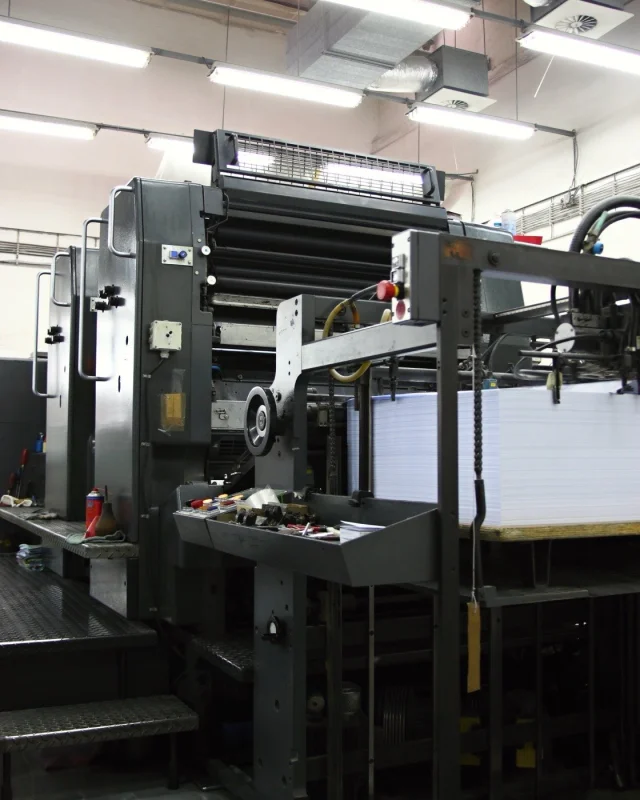
Fast to lose trade, slow to get equipment back, and a reopening that does not bring the customers with it straight away.
Whatever the operation, the limit is built the same way: net income, plus the fixed expenses that continue, over a realistic restoration period. The most common mistake is not buying the wrong policy. It is anchoring on last year's net profit and setting the limit too low.
This is the part that catches business owners off guard more than any other aspect of the cover. Business interruption is not a promise to replace income whenever income stops. It responds to income lost because of physical damage your underlying property policy covers. No physical damage, no claim, however real the loss.
Four closures, and which of them the policy answers:
Covered: A fire destroys your production floor and forces a three-month closure.
Not covered: A power outage shuts you down for four days without physically damaging anything.
Not covered: A government-ordered closure with no adjacent physical damage behind it.
Not covered: A slow quarter because foot traffic dropped. Trading conditions are not an insured peril anywhere.
The underlying property policy matters just as much as the trigger. Business interruption only responds to the perils that policy covers, so if flood is excluded there, a flood closure is uninsured here too. The two are read together or not usefully at all, which is why the place to start is the property policy underneath it rather than this one.
The gaps
Knowing the exclusions in advance is considerably more useful than discovering them during a claim, and on this policy most of them come down to the same thing: no physical damage, no cover. Eight that matter.
WHAT YOU NEED
Excluded from your underlying property policy by default, which excludes them here too. Separate endorsements or policies are needed in both places.
WHAT YOU NEED
Standard forms do not respond.
WHAT YOU NEED
Civil authority cover, which itself requires proximate physical damage. A government order on its own is not a trigger.
WHAT YOU NEED
Clean, current financials. The claim is proved from your books, and books that cannot prove it cannot recover it.
WHAT YOU NEED
An off-premises utility interruption endorsement. Without it, a supply failure that does not damage your property is not a claim.
WHAT YOU NEED
Cyber liability, where business interruption is a distinct trigger written for systems rather than for buildings.
WHAT YOU NEED
Generally uninsurable. This policy responds to physical events, not to trading conditions.
WHAT YOU NEED
Contingent business interruption, a separate endorsement covering income lost when a key supplier or customer suffers damage. Often sub-limited.
Six of these eight are the same sentence in different clothes: without physical damage to covered property there is no claim. The two that are not, undocumented income and an unendorsed supplier dependency, are both fixable before a loss and neither is fixable after one. Where systems rather than premises are the exposure, the answer is interruption caused by a cyber incident, which is a different policy with a different trigger.
Timing mechanics
Two timing mechanics in every business interruption policy determine when cover starts and when it stops, and a third decides whether it carries you back to where you were. All three are negotiable at placement, and all three are usually left at default. That is how a business with an adequate limit still runs out of cover.

The gap between the physical damage happening and benefits beginning. Most standard policies set it at 48 to 72 hours, and it works like a deductible measured in time rather than in money. For an operation that loses serious revenue in the first two days that default is a real cost, and it is negotiable at placement rather than afterwards.
How long cover runs. The policy pays until the damaged property should be repaired with reasonable speed, and on a business owners policy typically for no more than twelve months. The trap is that most limits are sized on how long it takes to repair premises, and plenty of businesses are not waiting on premises at all. They are waiting on a machine with a nine-month lead time, or on a permit.

An endorsement carrying cover beyond the restoration period, to pay for the ramp back up. A restaurant that reopens is not a restaurant trading at pre-loss revenue. Without this endorsement the standard form stops paying 60 days after the doors open rather than on the day the revenue returns, which is frequently months apart.
All three are configurable at placement and all three are usually left where the form put them. We work through a realistic restoration period for your type of operation with you before submitting, because the limit and the clock have to agree with one another. Limits set without a financial review are how a business discovers a shortfall at the worst possible moment. The same discipline applies to what your contract asks the certificate to evidence, where a landlord or lender wants the cover named rather than assumed.
Speak to our teamTiming check
Each line below changes the timing terms or the limit a business interruption policy has to carry. Nothing here is priced and nothing here is a quote. It shows which parts of the clock your placement has to negotiate.
What the timing terms have to say
Tick what applies and the terms it implies appear here.
Bring your last twelve months of financials to this conversation. Every line above turns into a number, and the numbers are what the policy actually pays on.
Speak to our teamCost
Business interruption is rarely sold as a standalone policy. It is placed alongside commercial property or inside a business owner's policy, so it is rated on the exposure it protects rather than on its own account.
The base figure the limit is built from, and the single largest driver of the premium. Documented rather than estimated, because the same documents prove the claim later.
How long you would actually be out, including equipment lead times and permitting. This sets how long the carrier might be paying, which is why they ask about it carefully.
Construction, occupancy, location and protection. Business interruption only responds to perils that policy covers, so its rate follows that risk closely.
A shorter wait costs more, for exactly the same reason a lower deductible does. It is a trade rather than a saving in either direction.
Each endorsement widens what the policy answers for, and each is priced accordingly. Both are frequently worth more than an equivalent increase in limit.
Contingent business interruption, and how concentrated your supplier or customer base actually is. A single critical supplier is a different risk from twenty interchangeable ones.
Three marks is an input that moves a business interruption premium more than the others here. It is a relative weighting drawn from how carriers rate, not a rate and not a quote.
Businesses anchor on last year's net profit, which is the wrong number. The limit has to carry net income plus the fixed expenses that continue, across a restoration period long enough to be true. A policy that is cheap because the limit is short is not a saving. It is a shortfall with a later delivery date, and the delivery date is the worst week the business has ever had.
Talk to an expertProcess
We understand your business first, then take it to the carriers who want to write it. An advisor walks you through the options and what they cost. No two files are the same, so what follows is the shape of a placement rather than a script.

Before anything is submitted we go through your financials with you, work out a realistic restoration period for your type of operation, and flag whether the limit you are carrying would actually cover net income and continuing expenses across that period.

Business interruption is rarely sold standalone. It goes onto the property policy or inside a business owner's policy, so the two are quoted together and the perils line up. An advisor talks you through what came back and where the timing terms differ between forms.

A landlord or a lender frequently wants business income cover named specifically, and this is how COIs get issued here. We read the certificate request against the document that generated it, so the endorsements that document needs are requested on the policy and the certificate reports what the policy provides, rather than answering from a template.
Physical damage to covered property that stops or reduces your trading. No physical damage means no claim, however real the income loss and however clearly you can document it.
Not on a standard form. A supply failure that does not physically damage your property needs an off-premises utility interruption endorsement, which is asked for rather than assumed.
Only through civil authority cover, and that requires proximate physical damage from a covered peril nearby. An order on its own is not enough.
The gap between the damage and benefits starting, usually 48 to 72 hours. It functions as a deductible measured in time, and it is negotiable at placement rather than fixed by the market.
How long cover runs, on a business owners policy typically capped at twelve months. It should reflect how long you would really be out, including equipment lead times and permitting, rather than how long the building takes to fix.
Without an extended period of indemnity the standard form stops 60 days after you reopen. With it, cover continues through the ramp back to pre-loss revenue, which for some operations is the larger half of the loss.
Documented net income, plus the fixed expenses that continue during a closure, over a realistic restoration period. Net profit alone is the most common wrong answer and it produces the most common shortfall.
That is contingent business interruption, a separate endorsement covering income you lose when a dependent supplier or customer suffers covered damage. It is often sub-limited, so the limit is worth reading as well as the cover.
Get started
We will review your financials with you, work through the restoration period your operation would realistically need, and take the cover to market alongside your property policy with limits built from actual numbers rather than carried forward from last year.
This page is general information, not a coverage determination. What your policy covers is governed by its own terms, conditions, and exclusions.