General Liability Insurance for US Businesses
General liability insurance covers third-party bodily injury, property damage you cause to property you don't own, and personal and advertising injury. It's the foundation policy almost every US business carries.
Core Coverage
The two coverages that matter most.
General liability is broad, but these two areas account for the majority of claims and the biggest contract requirements.
Coverage A+
Products and completed operations
GL includes coverage for claims that emerge after a product is sold or work is completed. The contractor who finishes a job and is sued six months later when the deck collapses. The manufacturer whose product injures a consumer two states away. This coverage has its own aggregate limit in most policies.
Key Benefit
Defense costs
In most standard ISO forms, defense costs are paid in addition to the policy limit, not from inside it. That matters more than it sounds. A six-figure lawsuit can drain a smaller policy on lawyer fees before settlement is even discussed. Some carriers offer defense inside the limit at a lower premium. We push for defense outside the limit wherever the carrier will write it.
Reference
Coverage at a Glance.
The five main parts of a standard commercial general liability policy.
Bodily injury
Coverage AWhat it pays for
Medical costs, legal defense, settlements for non-employee injuries
Common example
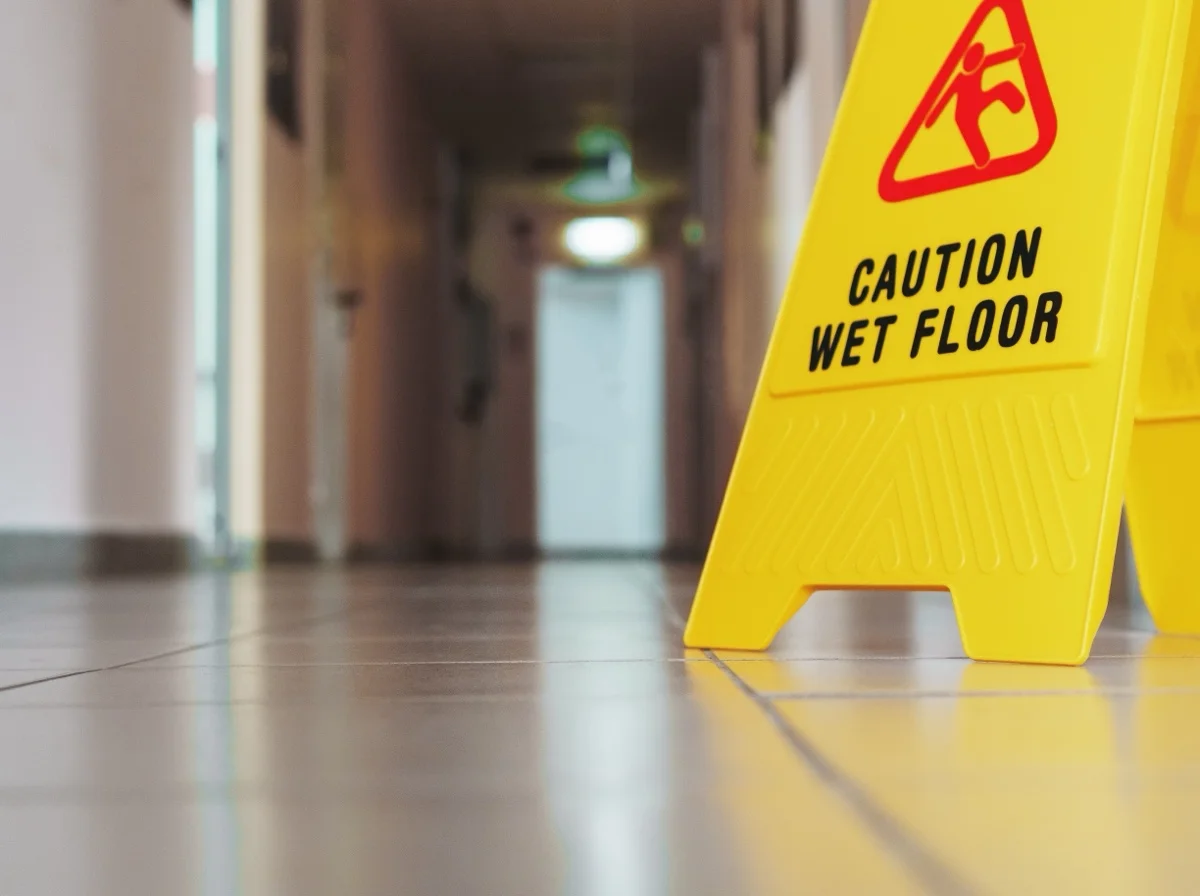
Customer slips on a wet floor in your retail store
Property damage
Coverage AWhat it pays for
Repair or replacement of third-party property your business damages
Common example
Your technician cracks a client's hardwood floor moving equipment
Personal and advertising injury
Coverage BWhat it pays for
Defense and damages for libel, slander, copyright in advertising, false arrest
Common example
Competitor sues over a comparison ad
Medical payments
Coverage CWhat it pays for
Small medical bills for non-employee injuries on your premises, no fault required
Common example
Visitor needs urgent care after a minor fall, you pay the bill without litigation
Products and completed operations
Separate aggregateWhat it pays for
Claims from products sold or work finished, often with a separate aggregate
Common example
Customer injured by a product you manufactured six months ago
What General Liability Does Not Cover
Most operators get burned by what's not in the policy, not by what is. Naming the gaps is how a broker earns trust.
Injuries to your own employees
What you need
Workers comp
Damage to property you own
What you need
Commercial property
Auto accidents in business vehicles
What you need
Commercial auto
Errors in professional advice or services
What you need
Professional liability (E&O)
Faulty workmanship (your own work product)
What you need
Depends on carrier and endorsements
Intentional acts and criminal conduct
What you need
Not insurable
Pollution events
What you need
Environmental policy required
Contractual liability beyond an insured contract
What you need
Review contract language with broker
Liquor liability
What you need
Separate liquor liability policy
Editorial
Key Exclusions Worth Knowing
A few carve-outs worth knowing about, because they show up in real policies and catch operators off guard:
The "Your Work" exclusion
GL is a liability policy, not a workmanship warranty. If your repair fails and the client sues to fix the work itself, that claim is generally excluded. Resulting damage from defective work may be covered, but the cost to redo the work usually isn't.
Subcontractor exclusions (CG 22 94)
A standard CGL form covers your subs' work as well as your own. Some carriers attach an endorsement that strips that out. For general contractors, this is critical. If you carry the exclusion, every sub on every job needs their own GL with you named as additional insured, or you're carrying the exposure yourself.
Action Over endorsements
These bar coverage when an injured employee sues a third party, like a general contractor, who then comes after your policy. Common in New York and increasingly elsewhere.
Height and depth limits
Some carriers exclude work above three stories or below a certain depth. Roofers and excavators get hit by these often.
Pollution exclusions
The standard form has a pollution carve-out. E&S carriers often attach a Total Pollution Exclusion that's even broader. If you handle fuels, solvents, or work in environments where mold, asbestos, or lead exposure is possible, this matters.
The point isn't to scare. It's that the coverage you think you have isn't always the coverage on paper. Speak to our team before you bind so we can read the form with you and flag what the carrier has narrowed.
How Much GL Coverage Do You Actually Need?
The default question most operators ask is "what's the minimum?" The better question is "what's the maximum claim my business could face, and does my limit cover it?"
Standard small business GL is written at $1M per occurrence / $2M aggregate. That was a meaningful figure in 2005. In 2026, with severity climbing and nuclear verdicts more common, $1M can disappear faster than operators expect.
The other thing clients actually ask for is endorsements. Additional insured wording, waiver of subrogation, primary and non-contributory language. These get added to your policy via specific endorsements and they show up on the certificate of insurance you send. Different carriers use different endorsement forms; some are broader than others. Your broker should be reading the contract language and matching the endorsements before bind, not scrambling at COI time.
$2M / $4M
Most general contractors require subs at this level. Larger commercial GCs increasingly require $5M.
$300K
On policies where defense is inside the limit, a $1M aggregate with $300K spent on defense leaves $700K for settlement. Standard ISO forms pay defense outside the limit, but some carrier-specific forms erode the limit — verify this term on each quote.
$1M+
A commercial umbrella layer typically starts at $1M and is one of the lowest-cost dollars of liability protection on the market.
Specific industries (heights, vehicles, public foot traffic, alcohol) should expect to carry more. Speak to our team about the right limits for your operation.
Our Process
How Much Does General Liability Insurance Cost?
There's no flat answer because there are too many inputs. The drivers are consistent across carriers.
Industry Classification
Largest single driver. Construction and physical-risk classes pay multiples of what office-based classes pay.
Revenue
Higher revenue generally means higher exposure and higher premium.
Payroll
Used as a rating base in some classes, especially construction.
Location
State, county, and even zip code affect the rate. Litigious jurisdictions cost more.
Claims History
Recent losses raise premium, sometimes sharply. A clean five-year history is worth real money.
Coverage Limits
Higher limits cost more, but not proportionally. Doubling from $1M to $2M aggregate is usually well under double the premium.
Endorsements Requested
Additional insureds, waivers, primary and non-contributory wording, per-project aggregates each carry incremental cost.
Subcontractor Use
Carriers want to know if you sub work out and whether you require certificates from subs.
Low-risk classes (consulting, marketing, online services) tend to sit at the bottom of the market. High-risk classes (general contracting, manufacturing of certain products, certain hospitality operations) sit at the top, and may need to be placed in excess and surplus markets if admitted carriers won't quote them.
Premium isn't the whole cost, either. Carrier responsiveness on COIs, endorsement turnaround, and claims handling matter more once you're using the policy. A low rate that comes with a three-week certificate turnaround is expensive in a different way.
Submit a quote request and we'll come back with carrier options and real numbers for your specific operation.
Who Needs General Liability Coverage?
In practice, almost any business that interacts with customers, vendors, or other people's property. A few categories where GL is effectively non-optional:

Construction & Contractors
Construction and contractors
Often required by your licensing board, the general contractor on a project, or the property owner. $1M/$2M is the contract floor; $5M aggregate is increasingly normal on commercial projects.

Retail & Hospitality
Retail, restaurants, and hospitality
Slip-and-fall is the textbook exposure. Foot traffic equals premises liability claims.

Manufacturing
Manufacturing and product companies
Products and completed operations coverage matters more here than for service businesses.

Professional Services
Professional services firms
Even desk-based businesses get hit with GL claims, usually advertising injury or visitor injuries. And most client contracts require it.

On-Site Services
Anyone working on customer property
Plumbers, electricians, IT installers, cleaners, landscapers, anyone whose work brings them into a client's space.

Online Businesses
Online-only businesses
Often skipped, often a mistake. Advertising injury exposure exists the moment you run an ad campaign or post product comparisons.
Then there's the contract-driven demand. Commercial leases routinely require tenants to carry GL and name the landlord as additional insured. Vendor agreements often specify minimum limits and primary-and-non-contributory wording. Government contracts have their own requirements. If you do work for someone bigger than you, the contract probably names a limit.
Comparisons
General Liability vs. Other Business Insurance
A few common comparisons.
GL vs. professional liability
GL covers physical harm and property damage. Professional liability covers financial loss caused by your professional advice, service, or work product. A consultant who damages a client's laptop with coffee is a GL claim. A consultant whose strategy advice loses the client $200K is a professional liability claim. Most service businesses need both.
GL vs. business owner's policy
A BOP bundles GL with commercial property and usually business income coverage in a single policy, often at a discount. It works well for smaller operations with a fixed location and modest property values. Larger or more complex operations usually need standalone GL and property policies split out for more flexibility on limits and forms.
GL vs. commercial umbrella
Umbrella doesn't replace GL. It sits over the top, providing extra limit when an underlying GL claim exceeds the GL aggregate. Most umbrellas also extend over commercial auto and employer's liability under workers comp. They're a cost-effective way to reach contract-required higher limits.
Process
How Rosella Places General Liability Coverage
Rosella is a brokerage. We don't issue policies as a carrier. What we do is place coverage with carriers, compare the forms, and manage the policy through its life. The difference matters when you have a claim or a complicated certificate request.
Fast, Not Rushed: The process is fast because the manual work is automated, not because the judgment is rushed.
You submit once
When you submit a quote request, our system pulls your information into the carrier portals most likely to bind your risk, in parallel. For a standard small-business GL submission, that means quotes back from multiple admitted carriers inside a few business days. For E&S-market risks, the timeline runs longer because those carriers underwrite individually, but the submission work is the same.
We compare forms, not just price
When quotes come back, our brokers read the forms side by side. Coverage terms vary more than premium does between carriers. One quote might exclude a class of work you do regularly. Another might offer defense inside the limit while a second offers it outside. We flag the differences in plain English before you bind.
After bind, the operational side pays off
Certificates of insurance are generated in under two minutes, day or night. Additional insured endorsements, waiver of subrogation requests, and routine COI variants don't require a multi-day email chain. The system handles the volume so the broker can handle the exceptions.
If you've been with a brokerage that re-keys your information across a dozen portals and takes a week to send a certificate, this won't feel familiar. That's the point.
Get a quote
Tell us about your business and we will come back with carrier options and real numbers in a few business days.

GET STARTED
Ready to Place Coverage?
If you've got a contract requirement on your desk, a lease renewal coming up, or a carrier non-renewal you didn't see coming, we can move. Standard GL placements quote within days for most business classes.