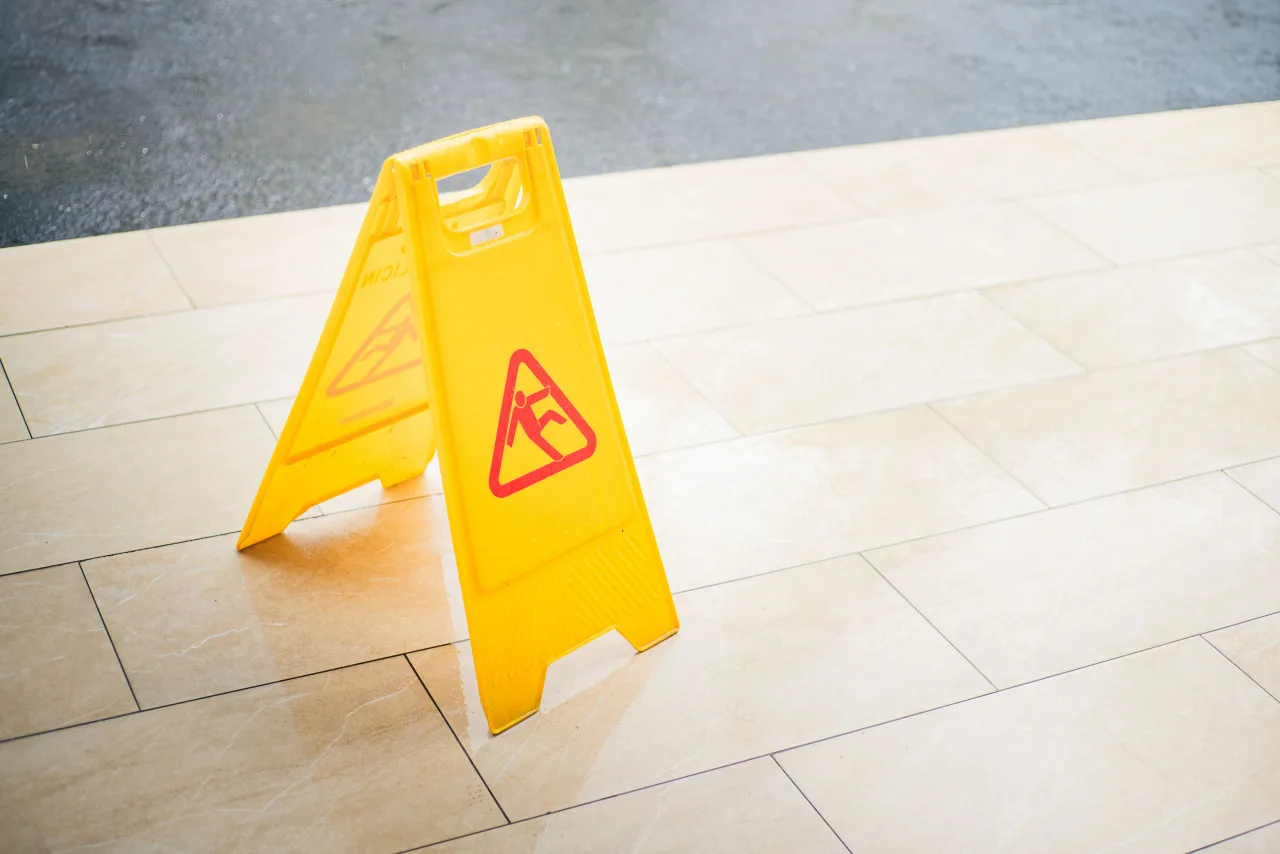

A customer slips on a wet floor. A vendor trips over a cable you didn't notice. A client sits in a chair that gives way under them. In each case, someone got hurt on your property. Your business is the one holding the liability.
That's what premises liability insurance responds to: third-party injuries and property damage that happen at your place of business. This guide explains what premises liability coverage actually includes, how it sits inside a commercial general liability (CGL) policy, which visitor types it covers (and to what degree), and what a real claim costs. If you operate a business that anyone other than employees visits, this is worth understanding before a claim lands on your desk.
What Premises Liability Insurance Covers
Premises liability insurance responds to claims where a third party (a customer, a vendor, a delivery driver, a guest) suffers bodily injury or property damage because of conditions at your business location. It typically covers legal defense costs, medical bills for the injured party, and any settlement or judgment, subject to your policy limits.
Common incidents that fall under premises liability coverage:
| Incident Type | Example | Typically Covered? |
|---|---|---|
| Slip and fall | Wet floor in a retail store or office | Yes |
| Defective equipment | Chair collapses under a client | Yes |
| Unsafe fixture | Handrail breaks on a staircase | Yes |
| Elevator or escalator accident | Malfunction injures a visitor | Yes |
| Attractive nuisance (children) | Child injured by unsecured pool or trampoline | Yes, with conditions |
| Employee injury on premises | Worker hurt in a break room | No (that's workers comp) |
| Damage to your own property | Fire damages your building or equipment | No (that's commercial property) |
The Insurance Information Institute notes that a CGL policy protects your business from financial loss when you're liable for property damage or bodily injury caused by your business operations, including incidents on your premises. The coverage isn't unlimited. What gets paid, and how much, depends on your policy terms, the facts of the incident, and the limits you selected.
How the Duty of Care Standard Works, and Why It Matters for Claims
Every premises liability claim turns on a legal concept called duty of care. As a business operator, you have a legal obligation to maintain reasonably safe conditions for people who enter your property. If you fail that obligation and someone gets hurt, you can be held liable.
OSHA's general industry standards require that walking and working surfaces be kept free of hazards: spills, loose boards, protruding objects, ice. Those rules run to employees and don't set the legal standard for customer claims, but the same physical conditions are what third-party premises suits are built on. A floor that isn't maintained is a floor that generates lawsuits.
In most states, premises liability law divides visitors into three categories, and the level of duty you owe differs by type:
Invitees are the people you invite or expect to show up: customers, clients, scheduled vendors. You owe them the highest of the three duties. That means actively inspecting for hazards, fixing problems promptly, and warning visitors of anything you can't immediately fix. A customer who sits in a broken chair and gets injured can hold you liable even if you didn't know the chair was defective, if a reasonable inspection would have caught it in time.
Licensees are people you allow on for their own purposes rather than your business: a social guest, or someone you let cut through the lot. You owe them a moderate duty: warn of known hazards, but you're not required to actively inspect for issues they might encounter.
Trespassers have a much harder time suing for injuries on your property, but you can still be liable for willful or reckless harm, and for known hidden dangers once you know people are getting in. The best-known exception is children injured by an "attractive nuisance": a pool, a trampoline, construction equipment. If you've left an artificial hazard where you have reason to expect children, the children are too young to understand the danger, and securing it would have been easy relative to the risk, you can be held responsible. Natural features and everyday hazards usually don't qualify.
This isn't universal. A number of states, California and New York among them, have dropped the categories and apply a single reasonable care standard to everyone lawfully on the property.
Most retail, office, and service businesses deal almost entirely with invitees. That means the highest standard applies, and any lapse in maintenance or hazard response becomes potential liability. This is general background, not legal advice. Duty rules vary meaningfully by state, so talk to counsel about how yours apply to your property.
Is Premises Liability the Same as General Liability Insurance?
For most small businesses, premises liability isn't a separate policy. It's a component of a standard commercial general liability (CGL) policy. The distinction matters because it affects what you're actually protected against.
General liability is broader. It covers third-party claims for bodily injury and property damage whether the incident happens at your premises, at a client's location, or somewhere in the course of your operations. Premises liability, technically speaking, only covers incidents at your physical location. A standalone premises liability policy would typically leave you exposed once you or your team set foot off-site.
Here's how the main options stack up:
| Coverage Type | Premises incidents | Off-premises operations | Damage to your own property | Best for |
|---|---|---|---|---|
| Standalone premises liability | Yes | No | No | Vacant land, landlords with no other operations |
| General liability (CGL) | Yes | Yes | No | Most small and mid-market businesses |
| Business Owner's Policy (BOP) | Yes | Yes | Yes | Businesses that own or lease commercial property |
Standalone premises liability policies do exist, but they're niche. They suit landlords who own commercial or residential property but don't run a business from it, or vacant land owners waiting on construction. For most operating businesses, a commercial general liability policy covers premises exposure alongside everything else.
If your business carries higher-than-average foot traffic (a restaurant, a gym, a retail store) or if you operate across multiple locations, speak to a Rosella broker before assuming your current GL limits are sufficient. Coverage requirements vary by lease terms, contract requirements, and the specific risks of your operation.
What Does a Premises Liability Claim Actually Cost?
The numbers are worth knowing. The Hartford, analyzing more than a million small business policies, put the average slip and fall claim at roughly $45,000 in its 2025 report, about double the figure a decade earlier. Serious injuries run well past that, into six figures. Those are averages, not caps.
Factors that push that number up include severity of injury (a fractured hip or traumatic brain injury settles higher than a sprained wrist), whether the state uses comparative fault rules (which reduce the payout when the visitor shares blame, and in many states bar it outright once their share crosses 50%), and whether the injured party was an invitee, which triggers the highest duty of care.
Many standard GL policies carry a $1 million per-occurrence limit with a $2 million aggregate. For a coffee shop or small office, that's a common starting point. For a fitness studio, a restaurant, or any business where falls are a regular risk, it might not be. That's where excess liability coverage comes in. A commercial umbrella policy sits above your base GL limit and can respond when a covered claim exceeds what your primary policy covers, subject to its own terms. It's often a cost-effective way to increase total coverage capacity.
Costs also include what doesn't reach settlement: attorney fees, court costs, and the time your team spends managing a claim. Those run on the clock regardless of outcome.
This guide is general information, not a coverage determination. What your policy covers is governed by its own terms, conditions, and exclusions.