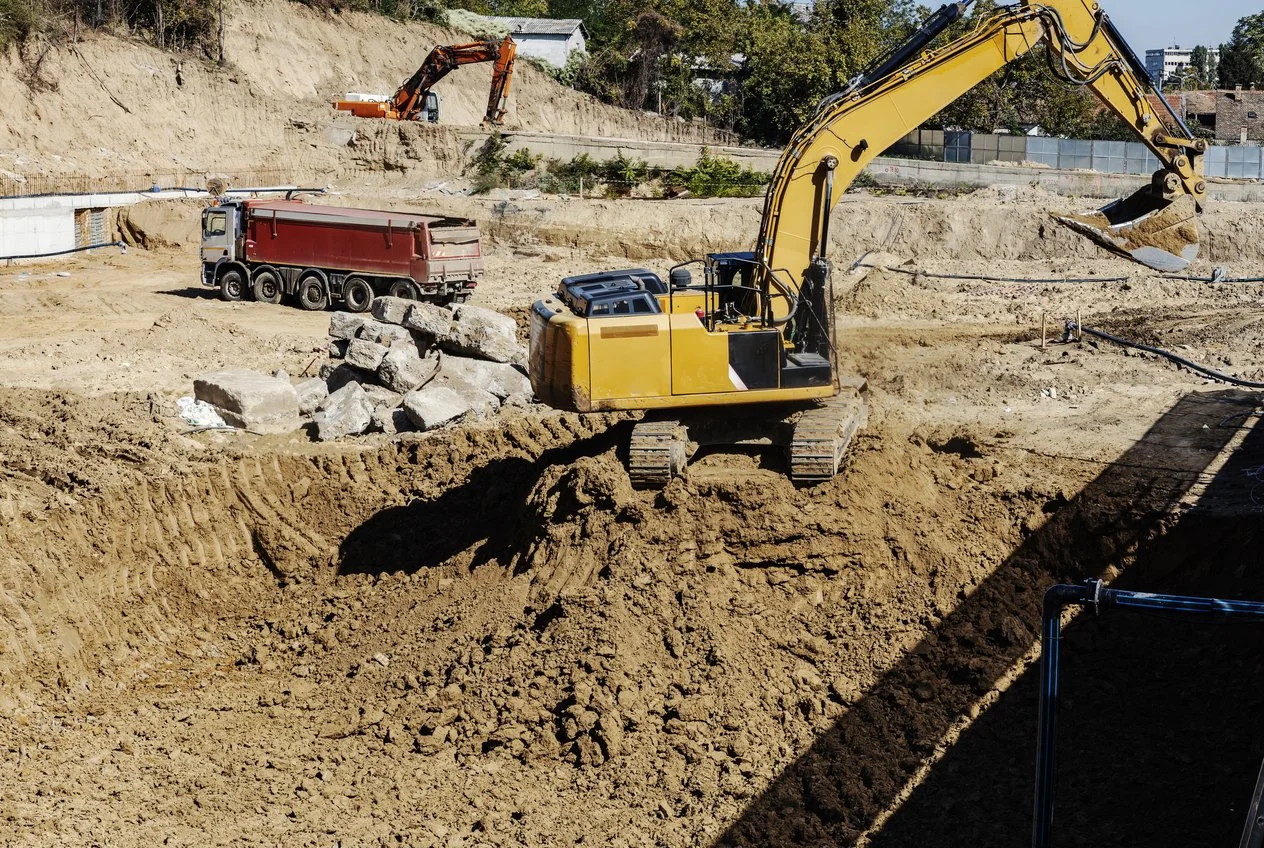
Tracked excavator working a deep open excavation, with a dump truck and broken concrete behind

Excavation and utility contractor insurance

Utility contractor insurance for an excavation firm covers general liability that can include underground utility strikes, workers compensation for crews in the trench, and contractor's equipment for the excavators, loaders and drill rigs you own or rent. Many liability forms written for excavation exclude damage to underground services unless the exclusion is bought back, so the line you hit is the claim that tests the whole program.

Talk to an expert

Get a quote

The program

What excavation contractor insurance covers

An excavation program is built around one awkward fact: most of what can go wrong is out of sight until the bucket finds it. Five policies sit on nearly every account. Two more arrive with the job, pollution when the ground is not clean and railroad cover when the route crosses a track.

01On every program

Contractor general liability. With the underground hazard written back in.

Third-party injury and property damage from your digging, and from finished work after you leave. For an excavation firm the question that matters is whether the form treats damage to buried lines, collapse of neighboring ground and blasting as covered, or carries them as exclusions you have to buy back.
02On every program

Workers compensation. The trench sets the class.

Medical costs and lost wages for operators, pipe layers and laborers. Excavation sits in some of the heavier construction classes because a trench wall can fail without warning, and the payroll in those classes drives most of the comp premium.

03On every program

Contractor's equipment. The machine, not what it hits.

Excavators, loaders, dozers, trenchers and drill rigs, owned and rented, written as inland marine and scheduled by value. It typically pays to repair or replace the machine after an overturn into a cut, a fire or a theft from an unattended site.

04On every program

Commercial auto. Including the lowboy.

Dump trucks, service trucks, pickups and the tractor and trailer that move machines between sites. Whether each piece of equipment counts as an auto or as mobile equipment decides which policy responds, and it is worth settling before a claim rather than during one.

05On every program

Umbrella and excess. Sized to the line you could hit.

Contracts commonly ask for $1M per occurrence and $2M aggregate on general liability, and utility owners and larger developers often set a higher total. A struck gas main or transmission fiber can run past primary limits, which is the loss an umbrella is bought for.

06Where the work leads

Contractors pollution liability.

A ruptured fuel line, a sewer main breached during a tie-in, or contaminated soil turned up by the bucket. The pollution exclusion on a contractor's liability form, often a total pollution exclusion, can reach most of these, so they need a policy written for them.

07Where the work leads

Railroad protective liability.

Required by a railroad before you work on or near its right of way, and issued in the railroad's name rather than yours. A utility crossing under a track is one of the commonest reasons an excavation firm is asked for one.

Every policy here is rated on how your crews actually work, and the comp side most of all, which is why the way workers comp is priced from payroll matters more to an excavation firm than to most trades. Excavation is one role among many on a site, and the construction insurance hub shows how the others split their programs.

What you dig

Four kinds of digging, four ways to meet a buried line

How often a crew meets an existing service depends on where it digs and whether it can see the hole. Pick the closest match and the ledger shows what an underwriter wants to know, and where the program needs extra wording.

Mass excavation, grading and site preparation

Cut and fill, building pads, basements and haul roads on developer and commercial sites. Large machines, large volumes of soil moved, and a site that changes shape every day while other trades wait on you.

What underwriters askDepth of cuts, haul routes, shoring and dewatering, and how close the work runs to existing structures
The claim that shows upA neighboring building or road undermined by a deep cut, and a machine overturned at the edge of an open excavation
Endorsements it needsCollapse hazard confirmed or bought back, additional insured for the developer, completed operations
Watch forRemoving the ground that holds up a neighbor is the collapse in XCU. A deep basement beside an occupied building is exactly where a form carrying that exclusion fails.Talk to a broker about this

Most mid-market firms do two or three of these, and the program is rated on the mix. Moving into drilling or dense urban dry utility work changes the strike profile more than most shifts, so it belongs in the submission rather than in the first claim.

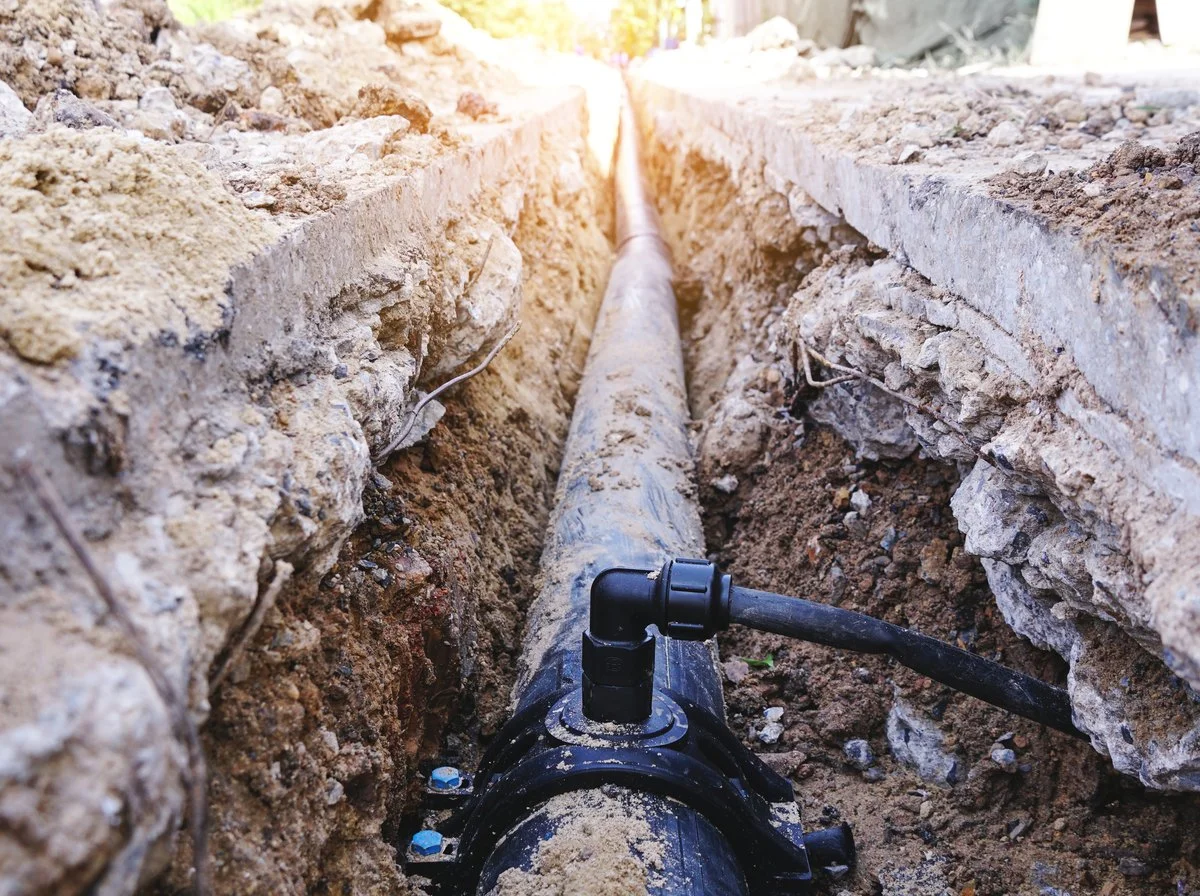
Water main exposed in a narrow trench with a service connection clamped to it

What actually triggers a claim against an excavation contractor

Many excavation losses start with something nobody could see from the cab: a line off its mark, soil that looked stable, a service the one-call system never knew about. The argument afterwards is about what you did before the bucket went in, and which policy that leaves holding the loss.

Four bad days on one water main job, and where each loss tends to land:

Covered: A gas service is struck inside a valid locate ticket while the crew hand-exposes a crossing. On a program with the underground hazard bought back, and subject to your policy terms, the repair and the third-party damage are a liability claim.

Not covered: The same strike on a form that still carries the underground exclusion. Your own policy declines it, and the utility's repair bill becomes a debt of the business.

Covered: A laborer is hurt when a section of trench wall gives way. Workers compensation generally pays the medical costs and lost wages, whatever the inspection that follows finds.

Not covered: The excavator slides into the cut and is written off. General liability does not pay for your own machine; that is a contractor's equipment claim, and only if the policy covers that machine.

The first two lines are the same strike with different wording on the policy. Whether the underground hazard is excluded is settled at binding, long before anyone digs, which is why how general liability treats damage to property you do not own is the first thing to read on an excavation quote.

The gaps

What excavation insurance does not cover

Eight exclusions an excavation firm meets most often. The first three are the XCU hazards, and on an excavation account they are the ones to read before anything else.

Damage to underground lines

WHAT YOU NEED

An underground hazard buy-back. Where the form carries the exclusion, a struck gas, power, water or fiber line stays uninsured until the exclusion is removed or written back by endorsement.

Collapse of neighboring property

WHAT YOU NEED

The collapse hazard covered on the liability form. Undermining a road, a wall or a building beside the cut is the C in XCU, and some excavation forms exclude it.

Blasting and explosion

WHAT YOU NEED

The explosion hazard written in and priced for the work. Rock blasting is usually declared and rated on its own, and a form carrying the explosion exclusion may not answer.

Injury to your own crews

WHAT YOU NEED

Workers compensation and employers liability. A trench collapse that injures your own laborer is generally a comp claim, not a general liability one.

Redoing your own trench

WHAT YOU NEED

Generally nothing insures it. Re-excavating and relaying a run you got wrong is a cost of the job, not an insured loss.

Your own excavators and loaders

WHAT YOU NEED

Contractor's equipment on inland marine. A liability policy answers for what the machine does to others, not for the machine.

Fuel, sewage and contaminated spoil

WHAT YOU NEED

Contractors pollution liability. The pollution exclusion on most contractor forms can reach a ruptured fuel line, a breached sewer and soil that turns out to be contaminated.

OSHA citations and penalties

WHAT YOU NEED

Generally not insurable at all. A written trench safety program and a competent person on every dig help keep them away.

The first card is the one this page exists for. It is settled when the program binds, and it cannot be added once the bucket has found the line. Where you also schedule machines, read how contractor's equipment cover follows a machine off the yard, because a machine lost in a collapse is the other half of the same bad day.

Below the surface

The loss is underground, and so is the exclusion

An excavation firm's worst day usually begins with a line in the wrong place. A gas main, a fiber trunk or a power cable is struck, and the utility that owns it sends a bill for the repair and the time it was out of service. Whether your policy pays that bill was decided months earlier, in an endorsement few owners ever read.

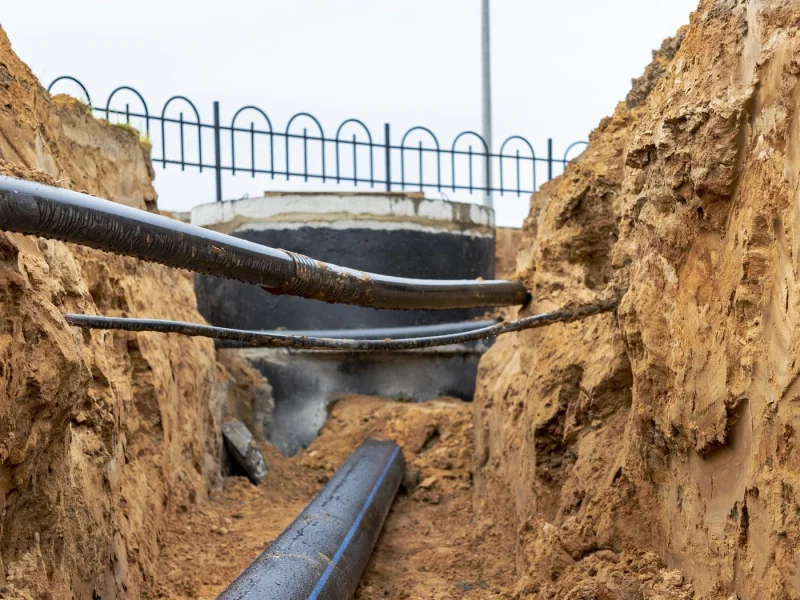
Open trench with black cables crossing above a buried pipe beside a concrete chamber

A strike is a liability claim, if the form lets it be

Damage to a buried line is damage to somebody else's property, so in principle general liability answers it. In practice many forms written for excavation add the XCU exclusions, for explosion, collapse and underground damage, either all three or the underground one alone. Where that endorsement sits on the policy, the strike is excluded however carefully the crew dug.

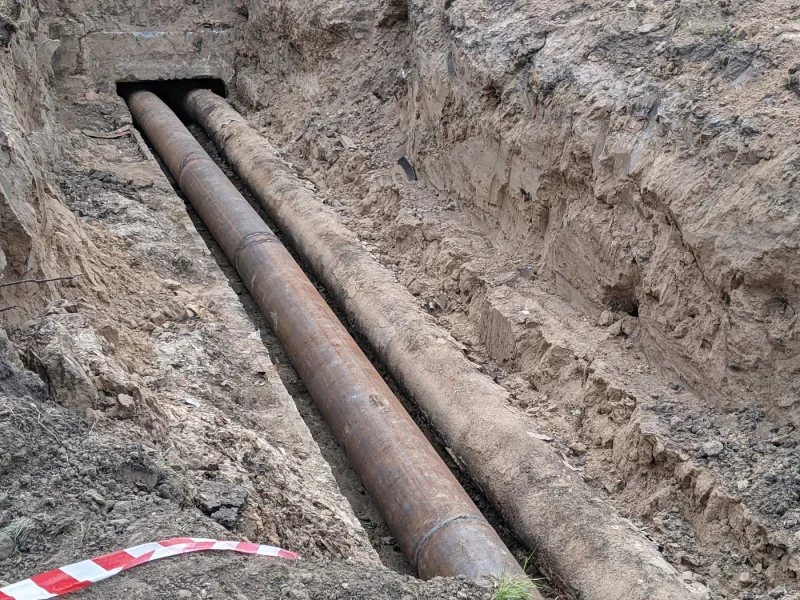
Two steel pipes exposed along the floor of a long open trench

The buy-back is a wording, not a promise

Removing the exclusion, or writing the hazard back by endorsement, is how an excavation program answers a strike. Read what comes back: a buy-back can be limited to some kinds of line, carry its own sub-limit or deductible, or apply only where a valid locate was requested. Each condition is a question the carrier will ask after the strike, so answer it before.

Site drawings, a pencil and a tape measure lying on open ground

A locate ticket is evidence about who pays

Every state runs an 811 one-call system and requires a call before you dig. The ticket insures nothing. What it does is shape the argument after a strike: a valid ticket, worked inside its dates with the line hand-exposed near the marks, points the bill toward a mismark, and no ticket points it at you. Member operators mark only the lines they own, so private services past the meter may not be marked at all.

Keep every ticket, every photograph of the marks and every pothole record with the job file, and read the underground wording before the program binds rather than after the first strike. For what the rest of the liability form leaves to other policies, see our general liability guide.

Speak to our team

Dig profile

Tick what your crews actually do

Each line adds a piece of wording to the program or a record the crews should be keeping on every job. Nothing here is a price; it is a list of what to ask for.

What the program and the job file need to hold

Pick a line on the left and the wording or record it calls for appears here.

Bring your current liability forms list, a recent locate log and any strike letters from the last three years to the first call. Together they show whether the underground hazard is covered or only assumed to be.

Speak to our team

Cost

How much does excavation contractor insurance cost?

Excavation contractor insurance cost turns on how deep you dig, how often you meet a buried line and what your machines are worth. Nobody can name a figure for a program until they have seen your strike history and your payroll by class. Six inputs move the premium most.

01

Strike history and locate practice

How many lines you have hit, what each one cost, and whether every dig sat inside a valid ticket. On an excavation file this is often the record an underwriter studies longest.

Effect on premium
02

Payroll in the excavation classes

Operators, pipe layers and laborers working in trenches sit in heavier comp classes than supervisors and yard staff. The split has to be recorded by class to be rated that way.

Effect on premium
03

Machine values and how they are kept

The scheduled value of every excavator, loader and drill, whether machines are left on unattended sites overnight, and how they are secured when they are.

Effect on premium
04

Depth and type of work

Shallow dry utility work, deep sewer, directional drilling and mass excavation are rated differently, and so is work beside occupied buildings or under roads.

Effect on premium
05

Loss history and experience modifier

Three to five years of loss runs across liability, comp and equipment, and the mod that follows from them. A serious trench injury weighs on the mod for several years.

Effect on premium
06

The underground and collapse wording

Buying back the XCU hazards is priced, and the conditions attached change what it costs. Some carriers will not offer it on some classes of work at all.

Effect on premium

Three marks means the input moves an excavation premium more than the others listed here. They rank the inputs against each other; they are not rates and not a quote.

What you can move before renewal

Payroll and depth are set by the work you win. The strike record is not. A firm that can show a ticket, photographs and a pothole record for every crossing, and a strike count heading down, hands the underwriter a better file, and that is the file carriers quote against.

Talk to an expert

Process

How a placement works

We understand your business first, then take it to the carriers who want to write it. An advisor walks you through the options and what they cost. No two files are the same, so what follows is the shape of a placement rather than a script.

  1. Loss runs and a payroll schedule spread on a desk beside a calculator and laptop

    We understand the business first

    What you do, where, with how many people, and what your contracts oblige you to carry. Those answers decide which markets will look at the file at all, and how much of the rest of this applies to you.

  2. Brokerage desk with a monitor in morning light

    We match it to the carriers who want to write it

    One set of information goes to underwriters with genuine appetite for your work rather than whoever happened to quote last renewal. An advisor talks you through what comes back and what it costs.

  3. Stamped certificate on a clipboard with a pen and a magnifier

    After bind, certificate requests read against your contract

    A main contractor wants proof before your crew can start, and this is how COIs get issued here. We read the certificate request against your contract, so the endorsements the contract needs are requested on the policy and the certificate reports what the policy provides, rather than a generic endorsement that may fail the review.

Typically general liability with the underground hazard covered, workers compensation, contractor's equipment for the machines, commercial auto and an umbrella. Contractors pollution and railroad protective liability are added where the work calls for them, and utility owners usually write additional insured and waiver of subrogation into the contract.

It can, but many excavation forms carry an exclusion for underground damage, alone or as part of the XCU hazards. Where it is on the policy, a strike is not covered until the exclusion is bought back by endorsement. The forms list on your current policy will show whether it is there.

Explosion, collapse and underground. They are three hazards that come with excavation work: blasting, damage to neighboring property when the ground gives way, and damage to buried lines and services. Some contractor liability forms exclude one or all of them unless they are written back.

Calling before you dig is a legal requirement, not insurance. A valid ticket is evidence that can move the repair bill toward a mismarked line, but whether your own policy responds still depends on the underground wording. Lines the utilities do not own, such as private services past the meter, are often not marked at all.

Generally yes, for your own employees: medical costs and lost wages, regardless of fault. It does not pay OSHA citations or penalties, which are generally not insurable. Federal rules require a protective system in trenches 5 feet deep or more unless the cut is entirely in stable rock.

Liability for what an excavator does on a site usually sits on general liability, as mobile equipment. Damage to the machine itself needs contractor's equipment cover. The truck and trailer that haul it are autos, and a machine that has to be registered for road use may be treated as one too, so classify each piece with your broker.

It depends on your strike history and locate practice, payroll in the excavation classes, the value of your machines, the depth and type of work, your loss history and experience modifier, and the underground wording you buy. Carriers quote against your actual file, not a figure picked in advance.

If you work near fuel lines, sewers or old urban and industrial ground, usually yes. The pollution exclusion on a contractor's general liability can reach a ruptured fuel line, a sewage release and contaminated spoil, and those claims need a contractors pollution policy.

Get started

Know what your program says about the ground before you dig.

Tell us what you dig, how deep and how many machines you run. We can read the underground wording with you line by line before a program binds.

  • Underground and XCU wording read with you
  • Direct and wholesale carrier access
  • Markets that write excavation and utility work

This page is general information, not a coverage determination. What your policy covers is governed by its own terms, conditions, and exclusions.

Row of concrete sewer pipe sections laid out on grass beside a graded site