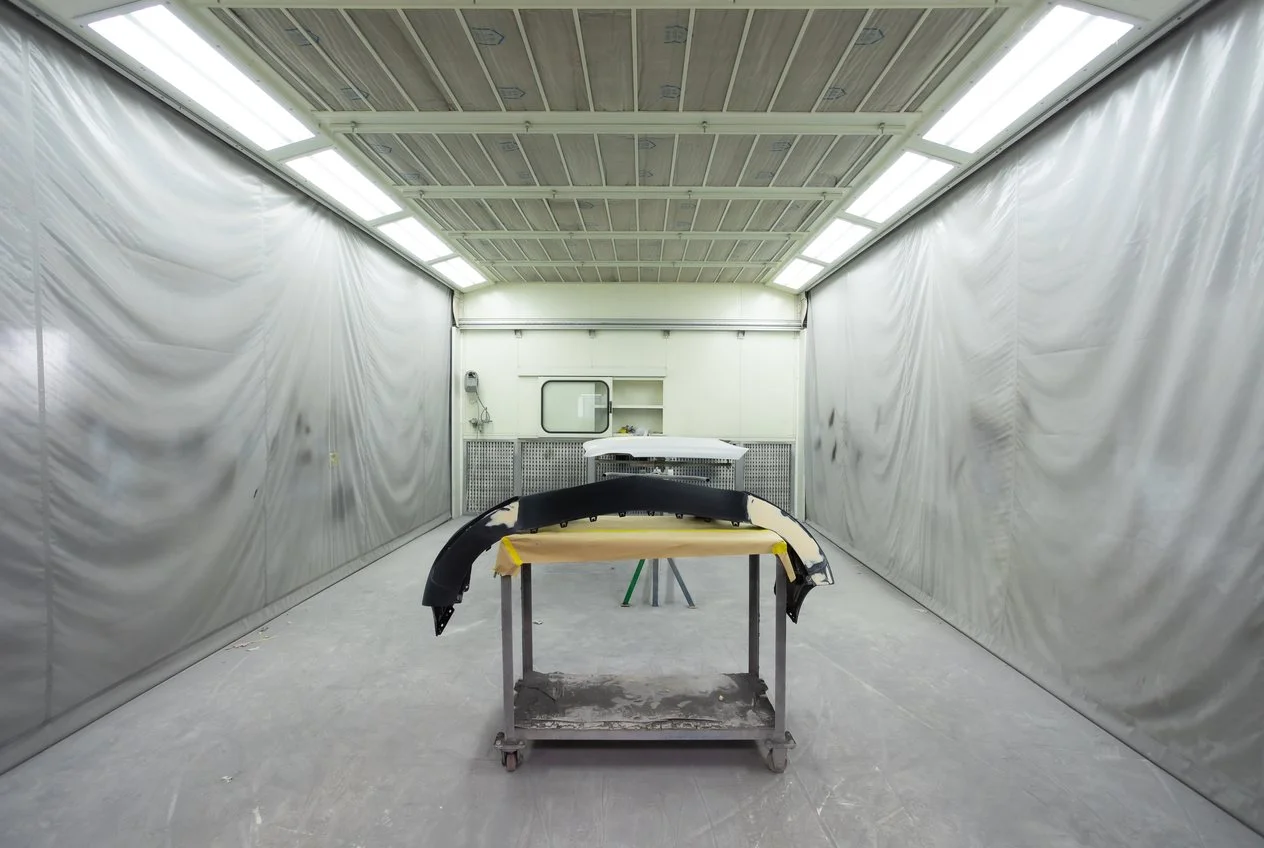
Empty downdraft paint booth with a primed bumper on a stand under the ceiling lights

Auto body shop insurance

Auto body shop insurance covers garagekeepers for customer vehicles, general and products liability for repair work, property cover for booths and frame machines, and workers compensation. Paint and solvent storage drives both the property and pollution terms, which is why body shop insurance is underwritten apart from a mechanical garage.

Talk to an expert

Get a quote

Core coverage

What auto body shop insurance covers

A collision program is built around two rooms, the booth where the paint goes on and the bay where the structure is put back. Two covers answer for those rooms; five more close what they leave.

01Built around the booth

Booth, building and frame equipment. What a refinish shop actually owns.

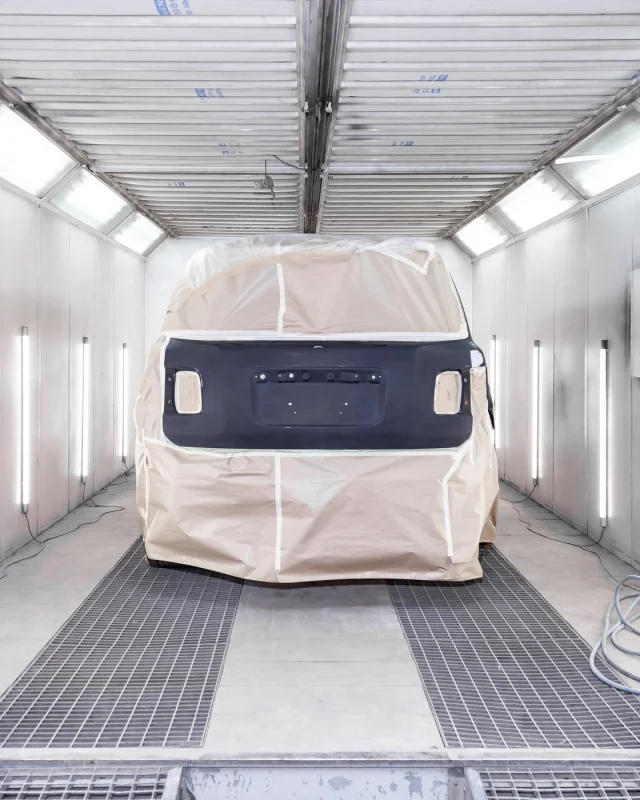
Downdraft and crossdraft booths, mixing rooms, frame machines, welders, measuring systems and the paint stock on the shelves. The valuation decided at binding is what a booth fire is settled against, so a booth carried at its original invoice can come up short on the day it burns.
02Built around the repair

General and products liability. Including the work that has already left.

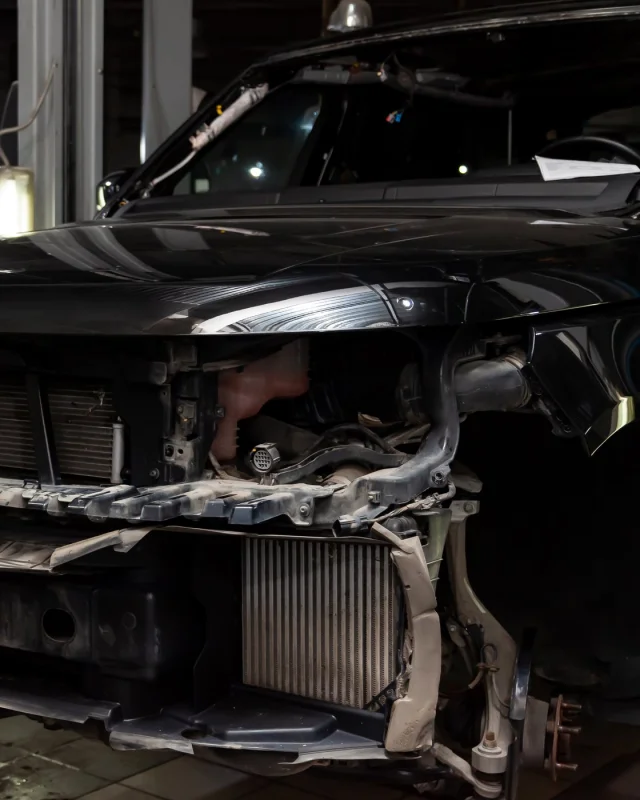
Injury and damage to third parties from your premises and operations, plus the products and completed operations hazard that answers after delivery. For a collision shop that second half carries the weight, because the structural repair is tested by the next crash, not by the customer at pickup.

03Closes a gap

Garagekeepers

The customer's vehicle while it sits in your bays, booths and lot. It belongs in every collision stack, and on a body shop the limit is driven by the value of what is waiting for parts as much as by the count.

04Closes a gap

Pollution liability

Thinners, reducers, spent solvent, paint sludge and booth filters. The standard pollution exclusion removes most of this from general liability, so a release from the mixing room or the waste drums needs its own cover.

05Closes a gap

Workers compensation

Frame pulling, grinding, welding, panel handling and the respiratory exposure that comes with two-component coatings. Payroll and class code set the base, and your own claims record can move it from there.

06Closes a gap

Equipment breakdown

The booth's burners and air make-up unit, compressors, air receivers and electrical panels. Property responds to fire; mechanical or electrical breakdown is a separate peril, and a booth that will not cure stops the whole production line.

07Closes a gap

Umbrella and excess

A layer over general liability, auto and employers liability. Multi-shop operators and shops on insurer referral or fleet programs are routinely asked for limits above what a primary policy carries on its own.

The booth is the line most often carried at the wrong number, because it was scheduled when it was bought and never revisited. Our brokers can check how the booth is valued at binding against what a like-for-like replacement and its installation would take today, and size the completed operations aggregate against what general liability answers for after delivery rather than against last year's renewal.

Your operation

Four kinds of collision operation

Most collision businesses do some of all four. What an underwriter separates them by is where the hazard sits: in the booth, on the frame bench, in the spread of locations, or in the value of one car waiting a long time.

Structural and collision repair

Sectioning, frame straightening, welding and bonding on unibody and mixed material vehicles. The work that decides how a car behaves in its next impact.

What the underwriter readsWhich OEM certifications you hold, whether repair procedures are pulled and saved per job, and how scans are recorded
Where the claim comes fromAn injury in a later crash that is traced back to a weld, a bond or a section joint
Cover it leans onProducts and completed operations at a contract-grade aggregate, umbrella over it, structural work inside the declared scope
Watch forA repair is judged against the procedure the manufacturer published for that vehicle. Keep the printout or the saved file with the repair order.Talk to an expert

If you have added a location, a booth or an OEM certification since the last renewal, the schedule the program was rated on no longer describes the business.

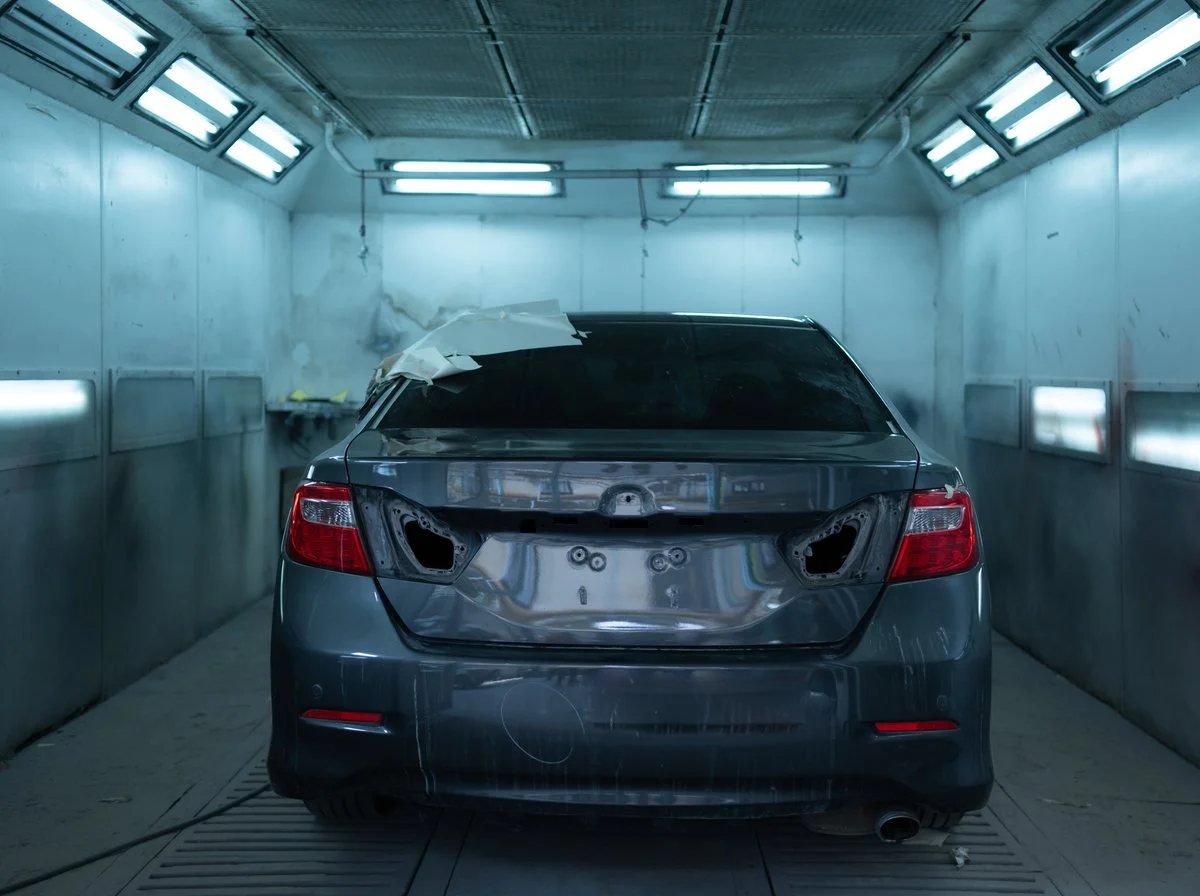
Grey sedan with its tail lights removed waiting inside a paint booth

When the booth catches, which policy pays

A booth fire is the loss this trade is underwritten around, and it rarely stays a single claim. The building, the booth, the cars inside it and the weeks the shop cannot paint each land on a different part of the program, and each part has to be there before the fire for any of it to respond.

How one fire usually splits, subject to your policy terms:

Covered: The booth, the building and the paint stock, under property, at the valuation chosen when the policy was bound.

Not covered: Customer vehicles burned inside the booth, if property is the only policy in force. The property form excludes road-licensed vehicles; those cars need garagekeepers.

Covered: Income lost while the booth is rebuilt and recommissioned, where business income is on the program and the waiting period has passed.

Not covered: Firefighting run-off carrying solvent into a drain or onto a neighbor's land, on a policy with the standard pollution exclusion and no pollution cover.

The weeks matter as much as the flames. A replacement booth has to be sourced, installed, inspected and signed off before the first car goes back in, and every one of those weeks is revenue the shop does not earn. Have the restoration period checked against how business income measures the outage, not against how long the fire took.

The gaps

What auto body shop insurance does not cover

Eight that come up on collision schedules. Most are not missing cover so much as cover that sits on a different policy from the one people assume.

Solvent and paint waste releases

WHAT YOU NEED

Pollution liability. Thinner, reducer, sludge and spent filters fall inside the standard pollution exclusion on general liability.

Booth burner or compressor failure

WHAT YOU NEED

Equipment breakdown. Property answers for fire; a burner, motor or air make-up unit that fails on its own is a separate peril.

Customer vehicles under property alone

WHAT YOU NEED

Garagekeepers. Your property policy excludes road-licensed vehicles, and the cars in your booths are owned by somebody else.

Putting your own repair right

WHAT YOU NEED

Generally nothing. The damage a failed repair causes can be covered; the labor and parts to redo it are usually the shop's cost.

Respiratory and chemical exposure to staff

WHAT YOU NEED

Workers compensation, backed by a written respirator and coatings program. Your liability policy generally does not answer for your own employees.

Work outside your declared scope

WHAT YOU NEED

A scope that matches the work. Structural aluminum, calibration or glass added after binding may sit outside what the carrier rated.

Delay and the customer's rental bill

WHAT YOU NEED

Clear terms on the estimate. A slow repair is a contract matter, and liability policies generally respond to damage, not to delay.

Sublet calibration, glass and alignment

WHAT YOU NEED

Certificates from every sublet vendor before the car leaves your bay. Their mistake on your repair order can come back as your claim.

Read together, the pattern is that a collision program is split between the premises and the finished repair, and a gap on either side stays invisible until the day it is needed. The custody half, garagekeepers against garage liability, works the same way it does on auto repair shop insurance, and is worth reading there before a renewal.

Where the risk sits

The booth, the shelf and the bench

Two of the exposures that set body shop insurance apart live inside the building. The third leaves with every finished car, and that is the one a shop can still be answering for years later.

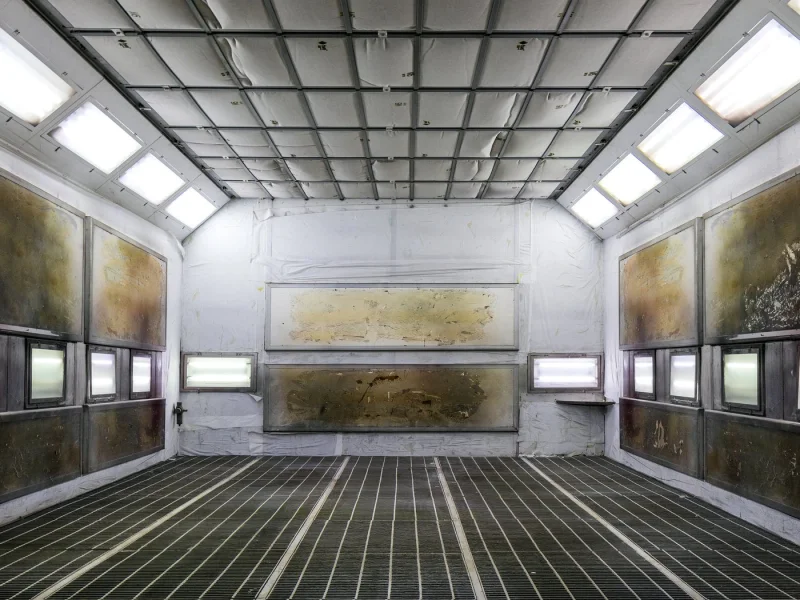
Empty spray booth with overspray-stained filter panels and a grated floor

The booth is the fire load

A spray booth concentrates flammable vapor, heat and dried overspray in one enclosure. Underwriters read it against the codes written for spray finishing, NFPA 33 and the OSHA spray finishing standard, and ask for the suppression system's inspection record, the filter change log and how often the plenum and ducts are cleaned. Those answers set the property terms more than the booth's price does.

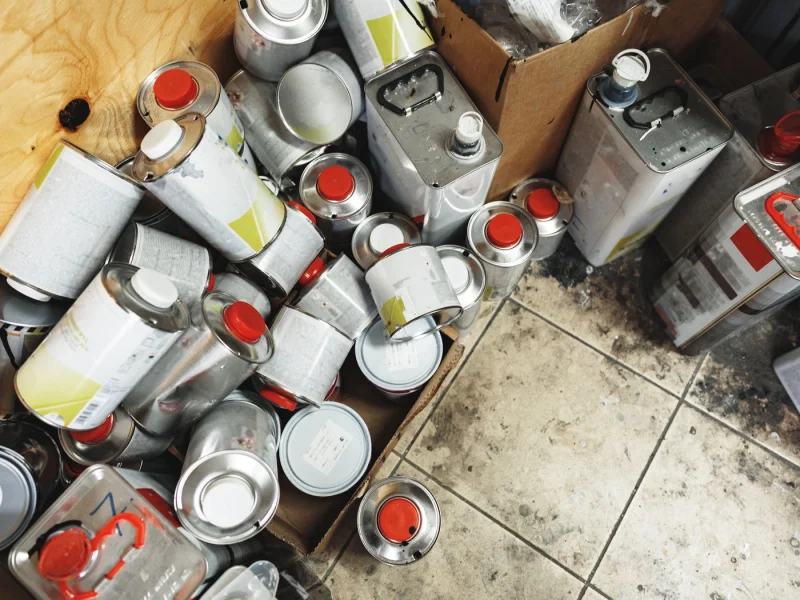
Used thinner and paint tins heaped in a box on a stained workshop floor

The shelf is the pollution exposure

Thinners, reducers and waste solvent are kept in quantities a mechanical garage rarely holds. How they are stored, in rated cabinets or a separate mixing room, and how the waste leaves under your hazardous waste generator status, decides whether a spill is a contained incident or a pollution claim general liability is unlikely to pay.

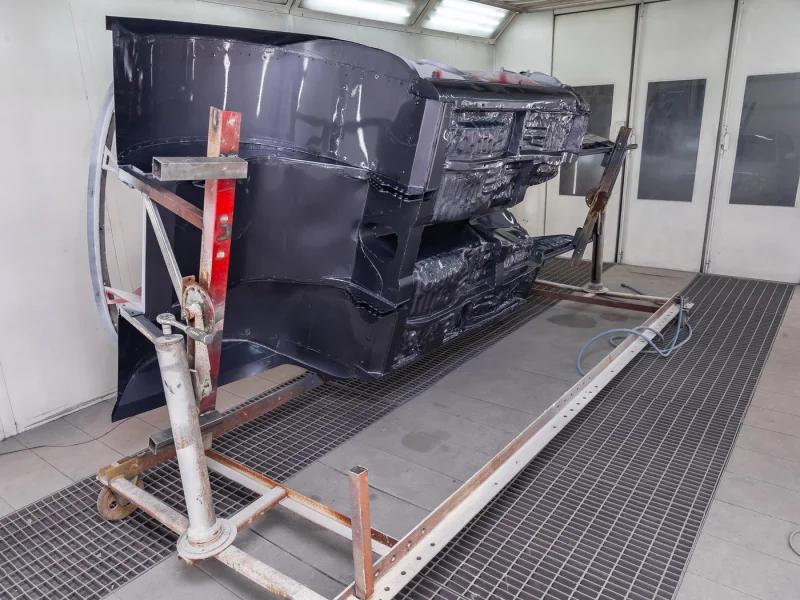
Car body shell mounted on a rotisserie frame inside a paint booth

The bench is the liability that drives away

Manufacturers publish repair procedures for each vehicle, and many publish position statements calling for scans before and after collision work. A structural repair that departs from that procedure, or a car released without the scan or calibration it calls for, is judged against it when the vehicle is in its next crash. That lands on products and completed operations, long after the invoice was paid.

The defense is the file. Save the procedure pulled for each repair, the scan reports and the sign-off with the repair order, and confirm with your broker that structural and calibration work sit inside your declared scope. It is worth understanding how products cover follows a finished job as well, because that is the half of the program this argument lands on.

Speak to our team

Program check

What does your shop actually do?

Tick what is true of your operation. Each line moves a term in the booth half or the repair half of the program. Nothing here is priced, and nothing is sent anywhere.

What your program needs to carry

Nothing selected yet. Pick the work your shops do and the terms that follow from it appear here.

Take this list to your next renewal meeting. On a collision program the schedule and the declared scope are usually further out of date than the limits.

Speak to our team

Cost

How much does body shop insurance cost?

There is no honest average for a collision operation. These six inputs explain most of the difference between two shops of the same size.

01

Booths, fire protection and housekeeping

Booth count, suppression, separation from the rest of the building and the cleaning record. The largest single driver of the property terms.

Effect on premium
02

Payroll and the class it sits in

Technician and painter payroll on the body shop class, adjusted by your own experience. Usually the largest line once crews are on the books.

Effect on premium
03

Solvent storage and waste handling

Quantities held, how they are stored and how waste leaves. Declared and controlled, it can be placed; undeclared, it is a reason to decline.

Effect on premium
04

Value of vehicles on site

Not just how many cars are waiting, but what they are worth and how long they stay. A shop full of late-model vehicles holds more value than its bay count suggests.

Effect on premium
05

Structural work and how it is documented

OEM certifications, procedure records and scan reports. They do not remove the completed operations exposure, but they change how a carrier reads it.

Effect on premium
06

Loss history across every location

Several years of loss runs, read site by site. For a multi-shop operator, one location with a poor record can set the tone for the group.

Effect on premium

Three marks is an input that tends to move a collision premium more than the others here. It is a relative reading of how these factors behave on a refinish risk, not a rate and not a quote.

What that means for your renewal

A body shop premium is priced in two halves: the building with its booths and solvents, and the repairs that have already left. Shops are often underinsured on the first and under-documented on the second. Talk to us and we will take your actual locations and your actual work to market.

Talk to an expert

Process

How a placement works

We understand your business first, then take it to the carriers who want to write it. An advisor walks you through the options and what they cost. No two files are the same, so what follows is the shape of a placement rather than a script.

  1. Loss runs and a payroll schedule spread on a desk beside a calculator and laptop

    We understand the business first

    What you do, where, with how many people, and what your contracts oblige you to carry. Those answers decide which markets will look at the file at all, and how much of the rest of this applies to you.

  2. Brokerage desk with a monitor in morning light

    We match it to the carriers who want to write it

    One set of information goes to underwriters with genuine appetite for your work rather than whoever happened to quote last renewal. An advisor talks you through what comes back and what it costs.

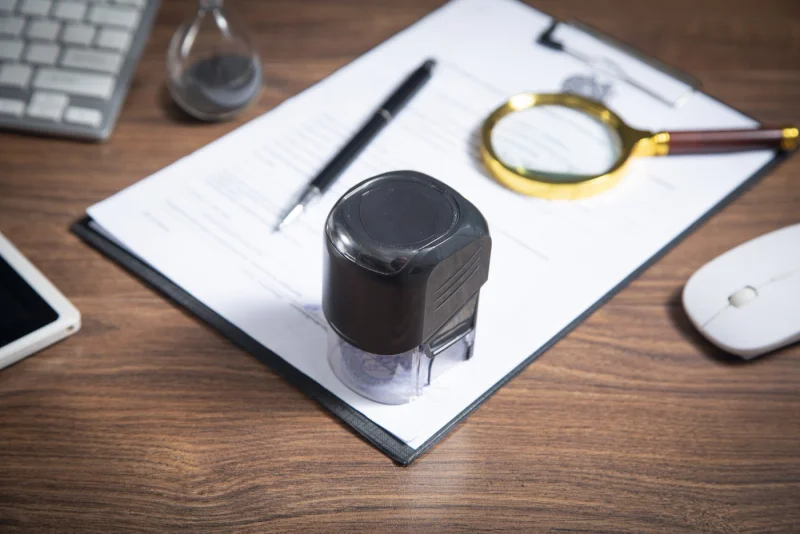
  3. Stamped certificate on a clipboard with a pen and a magnifier

    After bind, certificate requests read against your contract

    A client wants proof of cover before you start, and this is how COIs get issued here. We read the certificate request against your contract, so the endorsements the contract needs are requested on the policy and the certificate reports what the policy provides, rather than a generic endorsement that may fail the review.

Auto body shop insurance generally combines garagekeepers for customer vehicles, general and products liability for repair work, property cover for booths and frame machines, and workers compensation. Paint and solvent storage drives both the property and the pollution terms, and most established shops add equipment breakdown and an umbrella.

The two share garagekeepers and general liability, but a collision shop carries a paint booth, stored solvents and structural repair work that a mechanical garage usually does not. Those three change the property, pollution and completed operations terms, so the two are underwritten differently.

Usually, as a building improvement or as equipment, but the valuation matters. A booth scheduled at its original purchase price will typically be settled against that figure, so check that the limit reflects replacement and installation today.

Not by general liability alone in most cases, because the standard pollution exclusion removes them. Pollution liability, written as a separate policy or an endorsement, is what generally responds to a release on site.

You may be. A structural repair is usually judged against the procedure the manufacturer published for that vehicle, and a departure from it is difficult to defend once the car has been in another crash. That claim generally sits on products and completed operations.

They do not change what the policy covers, but they shape how a claim is defended and how an underwriter reads your work. Where the manufacturer calls for a scan, a saved report with the repair order is evidence the work was done.

Typically the booth type and count, the suppression system and its last inspection, filter and cleaning records, the mixing room arrangement and how waste solvent is removed. Local fire codes and NFPA 33 are the reference points they read against.

Generally yes. A single program with blanket property limits, one liability tower and a shared renewal date is the usual structure for a group, with terms for newly acquired locations so a purchase mid-term is covered while it is reported.

Get started

Cover for the booth, and for every car after it leaves.

Tell us how many booths and locations you run and what structural work you take on, and we will look for a program built around both halves of the risk.

  • Certificate requests read against your contract
  • Direct and wholesale carrier access
  • Booth values read against replacement, not invoice

This page is general information, not a coverage determination. What your policy covers is governed by its own terms, conditions, and exclusions.

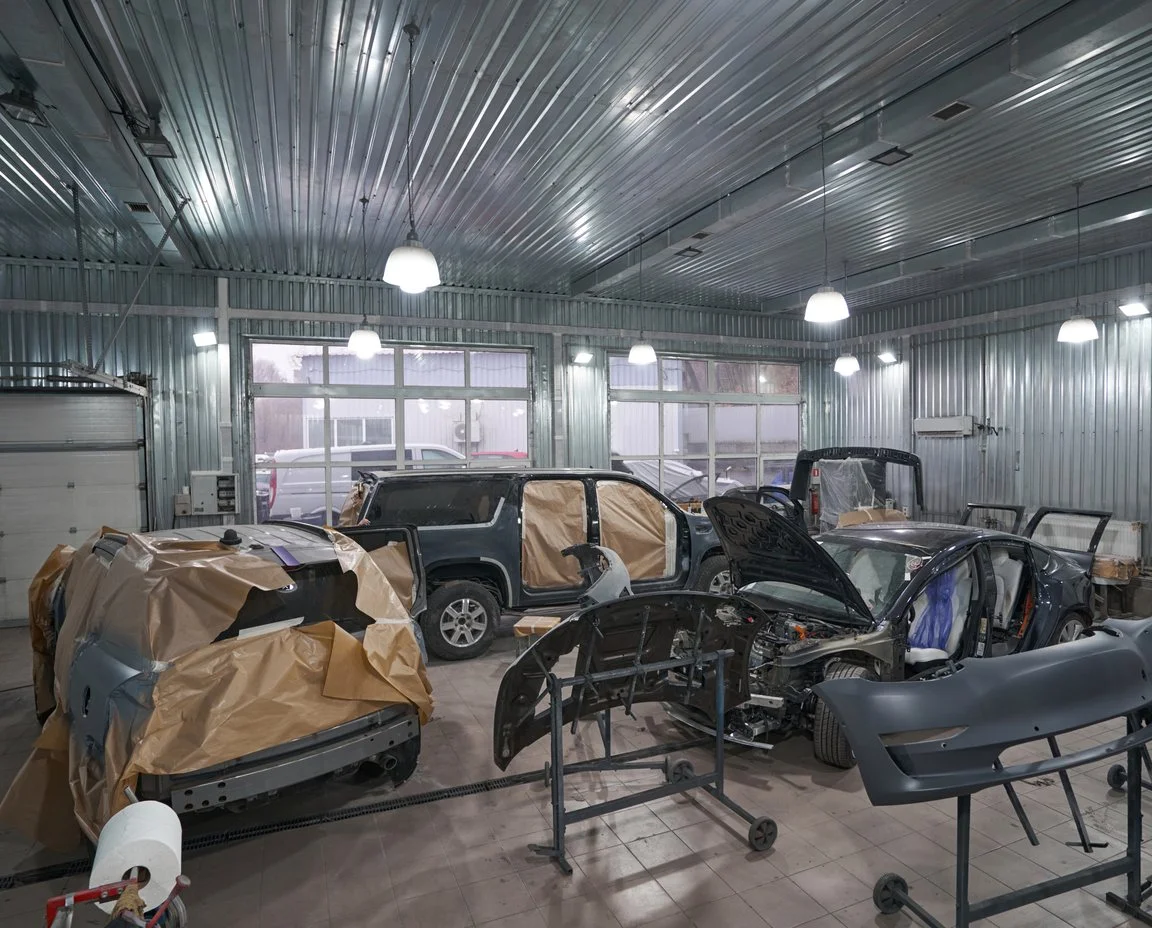
Body shop floor with masked vehicles and bumpers on stands under pendant lights